


Introduction
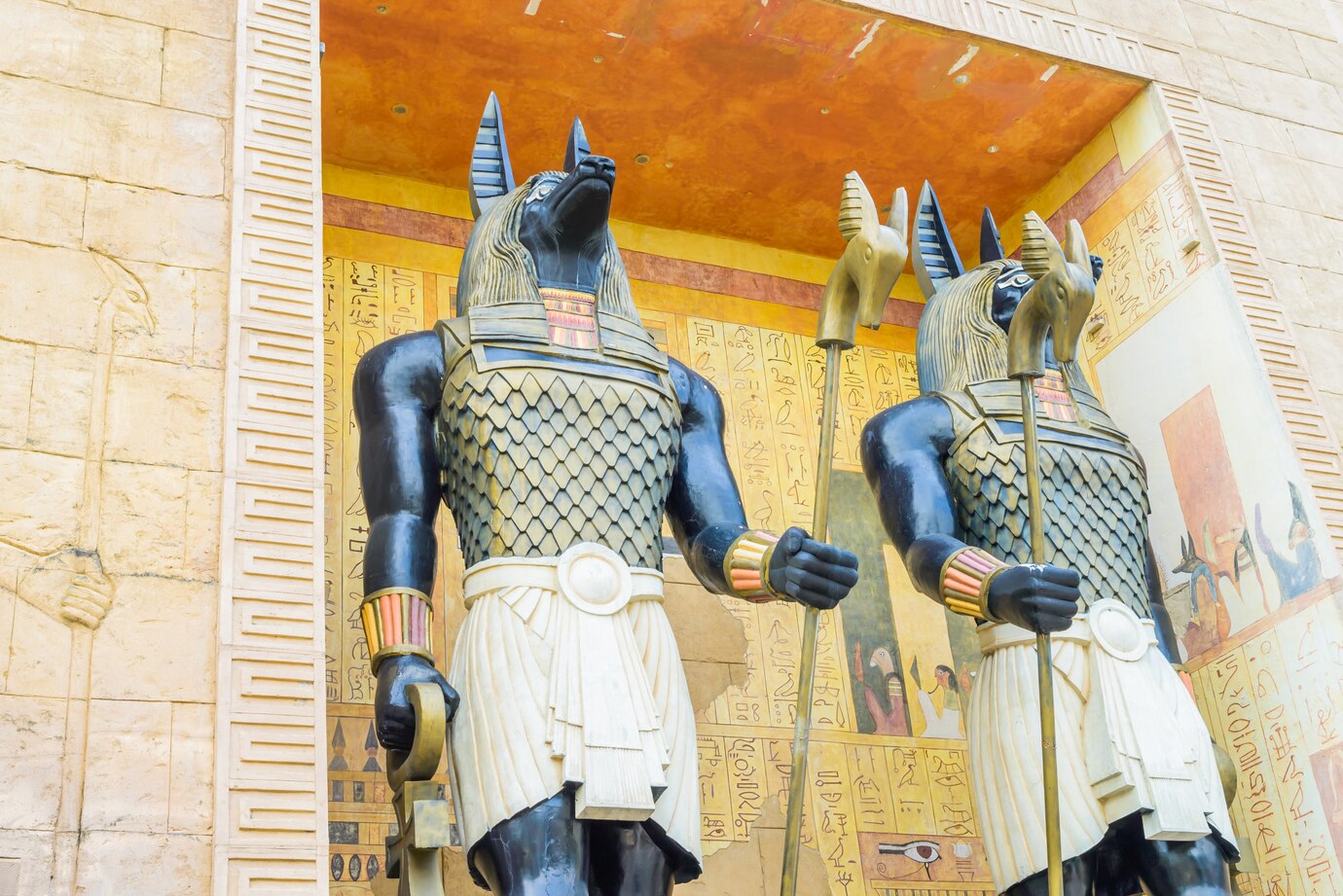
In ancient Egyptian mythology, Anubis stands as one of the most iconic deities, associated with death, the afterlife, and mummification. Often depicted with the head of a jackal or a canine-like figure, Anubis has long been linked to dogs and their symbolism in ancient cultures. This article explores the relationship between Anubis and dogs, shedding light on how these loyal animals became central to his mythology and role in Egyptian belief systems.
Who Is Anubis?
Anubis, known as Inpu in Egyptian, was a deity of death and the afterlife. He was:
- Depicted as a Canine or Human-Jackal Hybrid: His black-furred jackal-like head symbolized decay and regeneration, fitting his role in overseeing burial rituals.
- Guardian of the Dead: Anubis was believed to protect the deceased and guide their souls to the afterlife.
- Weigher of Hearts: In the Weighing of the Heart ceremony, Anubis helped judge the worthiness of a soul by comparing its heart’s weight to the feather of Ma’at, the goddess of truth.
-
The Canine Connection
Dogs and jackals were closely associated with Anubis for several reasons:
1. Observing Jackals Around Burial Grounds
- Jackals, wild relatives of dogs, were often seen near cemeteries in ancient Egypt.
- Their presence inspired the belief that they were guardians of the dead, watching over the departed to ensure their journey to the afterlife.
2. Symbolism of Loyalty and Protection
- Dogs, known for their loyalty, became emblematic of Anubis’s role as a protector.
- This loyalty mirrored the deity’s steadfast guidance for souls transitioning to the afterlife.
3. Canines in Daily Egyptian Life
- Dogs were valued in Egyptian society as hunters, guardians, and companions.
- Their roles in life may have influenced their sacred association with death and the afterlife.
Anubis in Mythology and Rituals
1. The Protector of Tombs
Anubis was believed to:
- Guard tombs from grave robbers and evil spirits.
- Oversee mummification to preserve the body for the afterlife.
2. The Guide to the Afterlife
Dogs’ keen senses and guidance in life likely inspired the belief that Anubis, in canine form, could lead souls safely through the dangerous journey to the underworld.
3. The Judge in the Afterlife
In the Book of the Dead, Anubis presided over the Weighing of the Heart. If the heart was lighter than Ma’at’s feather, the soul was deemed pure and allowed to proceed to the afterlife.
Dogs as Sacred Animals in Ancient Egypt
Although cats are often highlighted in Egyptian mythology, dogs also held significant roles:
- Burial with Owners: Archaeological findings show that some dogs were buried with their owners, signifying their importance.
- Amulets and Symbols: Dog-shaped amulets and figurines were common, symbolizing protection and guidance.
- Companions in Life and Death: Dogs were seen as protectors who could continue their service in the afterlife.

Modern Interpretations of Anubis and Dogs
Today, Anubis remains a popular figure in art, literature, and pop culture. His connection to dogs has made him a symbol of:
- Guidance: Reflecting the role dogs play as service and therapy animals.
- Protection: Echoing the protective instincts of dogs in families and law enforcement.
- Loyalty: Representing the enduring bond between humans and their canine companions.
The connection between Anubis and dogs highlights the deep respect ancient Egyptians had for these animals. Dogs were not only companions in life but also guides and protectors in death. Through Anubis, we see how mythology and everyday life intertwined, cementing the canine’s role as a symbol of loyalty, protection, and spiritual guidance.








0 comentários